
November 2, 2026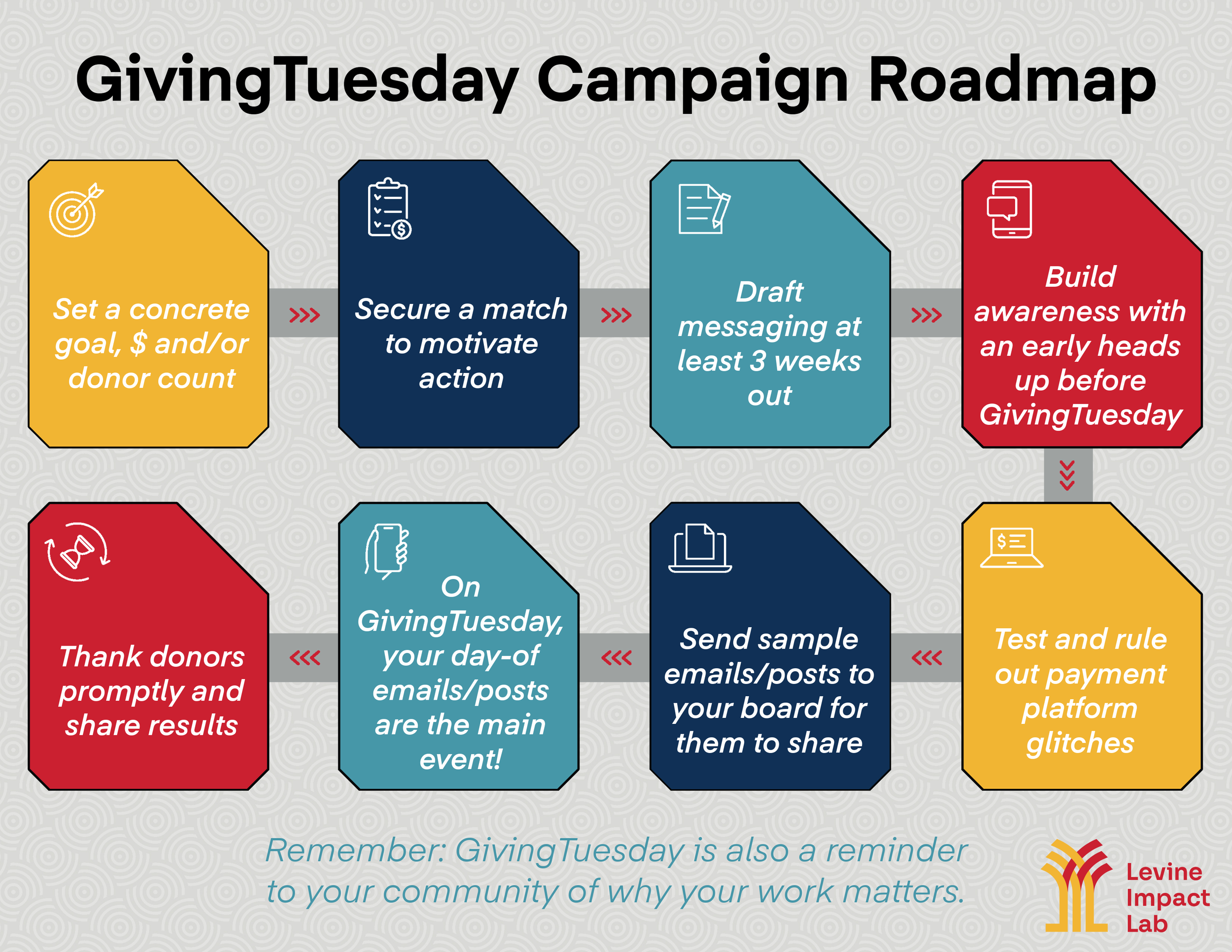
Even if you’re a small nonprofit, GivingTuesday can be a worthwhile opportunity to raise money and engage your community, provided you set reasonable expectations and keep the effort manageable. In 2025, an estimated 38.1 million people participated in GivingTuesday, and $4 billion was donated in the United States alone. While those numbers don't guarantee results for any individual organization, they demonstrate the scale of the generosity movement. Donors are primed to give and there is built in momentum that you can take advantage of. You don't need a big budget or a large staff to participate. What you need is a clear goal, a compelling story, and a plan you can realistically execute. The steps below outline a practical roadmap.
Set a Concrete Goal
A dollar target, a donor count, or both. A specific, public goal gives your community something to rally around and gives you something to celebrate when you hit it.If Possible, Secure a Match
A matching gift can motivate donors to act, as it increases the impact of their gift. If a matching gift isn't available, focus on what a donor's contribution will make possible.Build Your Messaging Before You're Rushed
Draft your campaign materials at least three weeks out, while you still have time to do it well. Plan for two emails on GivingTuesday. For your “day of” emails, include your value proposition, an impact story, and a clear call to action. If you can, recycle content you already have rather than creating everything from scratch. Include great photos or video clips. Your second email should include an urgency component, i.e. “there is still time to be a part of the movement,” as momentum messaging moves people to act. Write your emails and social posts together so they feel like an integrated, cohesive campaign.Build Awareness Before GivingTuesday
GivingTuesday is a noisy day that lands in the middle of the busiest time of year for fundraising, at a time when people are already distracted with the clamor of the holidays. An early heads-up will help get you noticed. Send a save-the-date email about two weeks beforehand to your full list (excluding anyone who has opted out), explaining your goal and what donations will support. Follow up a few days before the campaign. Keep the messages brief, clear, and consistent.Resource: Capturing Attention in a Crowded Market
Prep Your Donation Page and Payment Options
Test your donation page before the campaign goes live. Make sure it works well on a mobile phone, is easy to navigate, and makes it clear what a gift will support. Complete a test donation to confirm that payment processing, donor confirmation emails, and gift tracking are all working properly. Offer convenient payment options, such as credit cards and digital wallets, if your existing platform supports them. The easier you make it to give, the less likely you are to lose a donor along the way.Activate Your Board and Volunteers
Give them a sample post or message they can copy and send to their own network that they personalize with a statement about why they support your organization.Show Up on GivingTuesday
Your day-of emails are your main event, they ask directly and remind everyone that today is the day. Send an email in the morning and your second later in the day. Post on social media throughout the day. If possible, suppress people who have already donated from subsequent fundraising emails, as people want to know their gift was seen and appreciated, not receive another ask an hour later.Thank Donors Promptly and Share Results
Thank donors promptly, ideally with an immediate automated acknowledgment, followed by a personal thank you when feasible. Within a few days, share the campaign results with your broader community, including people who didn't donate. Then review your results: How much did you raise? How many donors participated? Did you reach new supporters? What worked, and what would you change next time? Capture those lessons before moving on to guide future fundraising efforts.Keep GivingTuesday in Perspective
Your GivingTuesday campaign doesn’t have to be elaborate. Set a goal you can reasonably achieve and make it easy for people to give. A well-executed, realistic campaign will help you build relationships with existing supporters. If done well, GivingTuesday isn’t just a fundraising day, it’s also a reminder to your community of why your work matters.